
Update: Edition 2
Edition 2 introduces big updates to Star Carriers, both to the kit and playbook, including all new SHIP miniatures, and rules for RESOURCES, home PLANETS, sustainability, ENIGMAS, and exchanges.
What's new in Edition 2
Kit
|
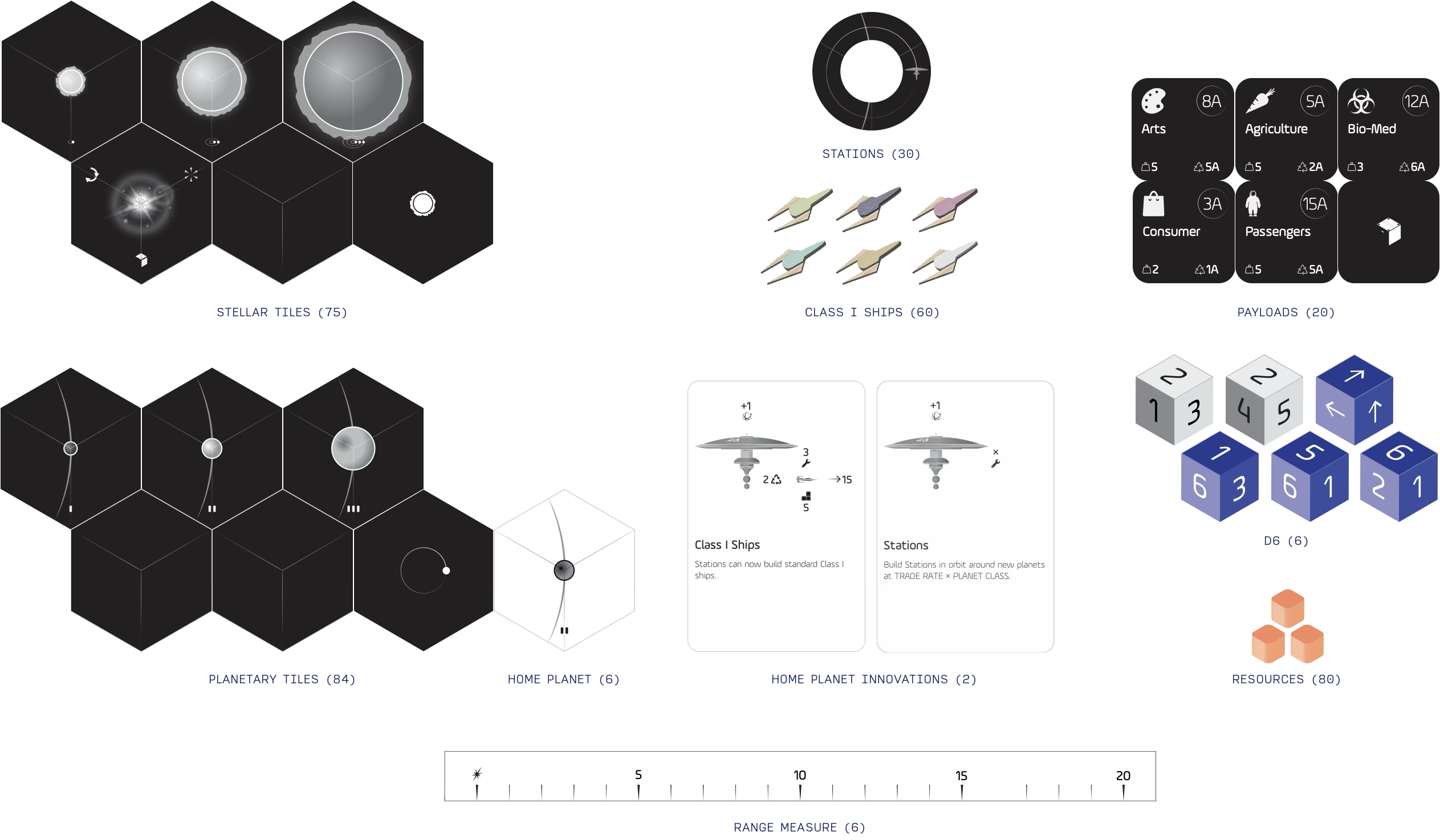
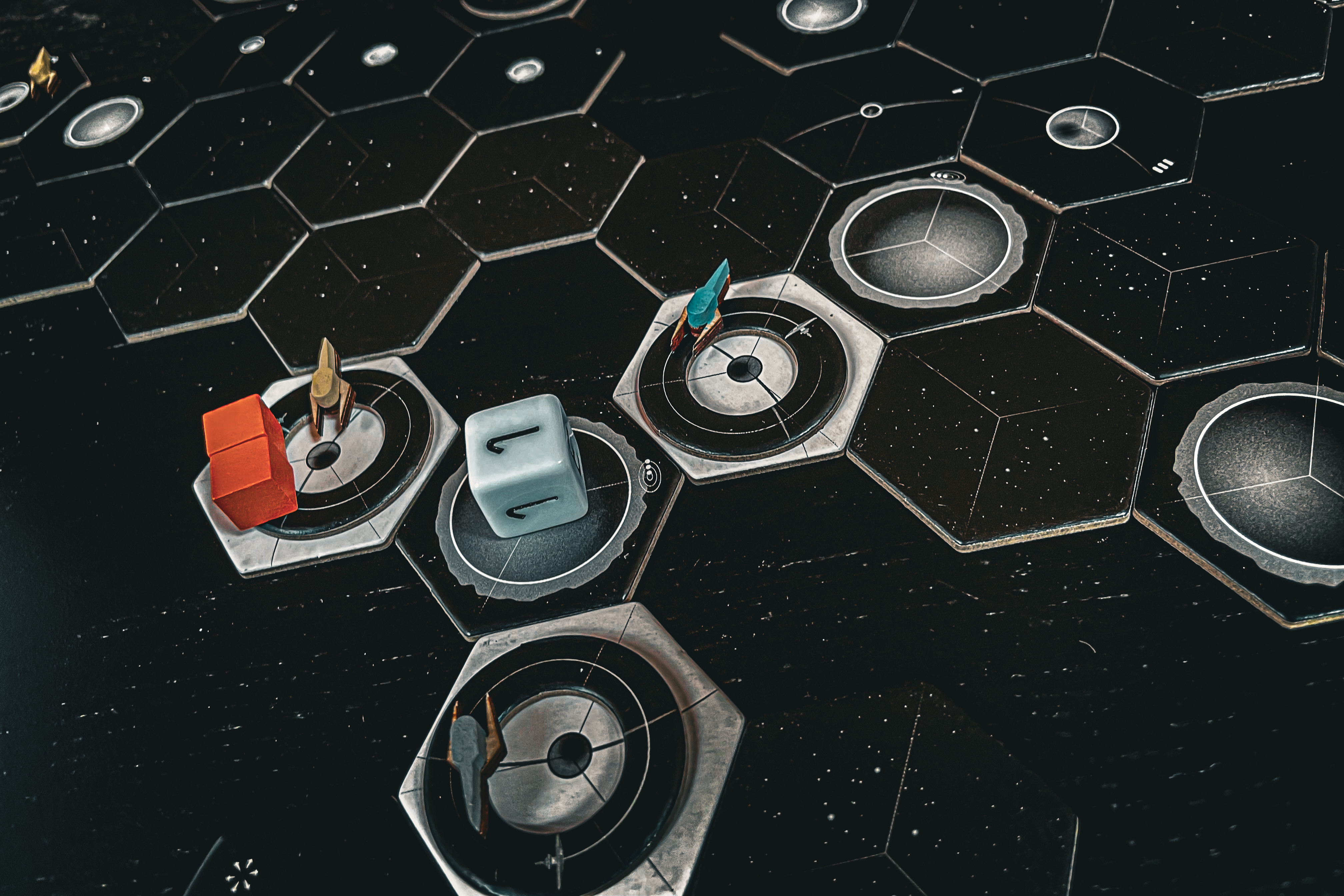
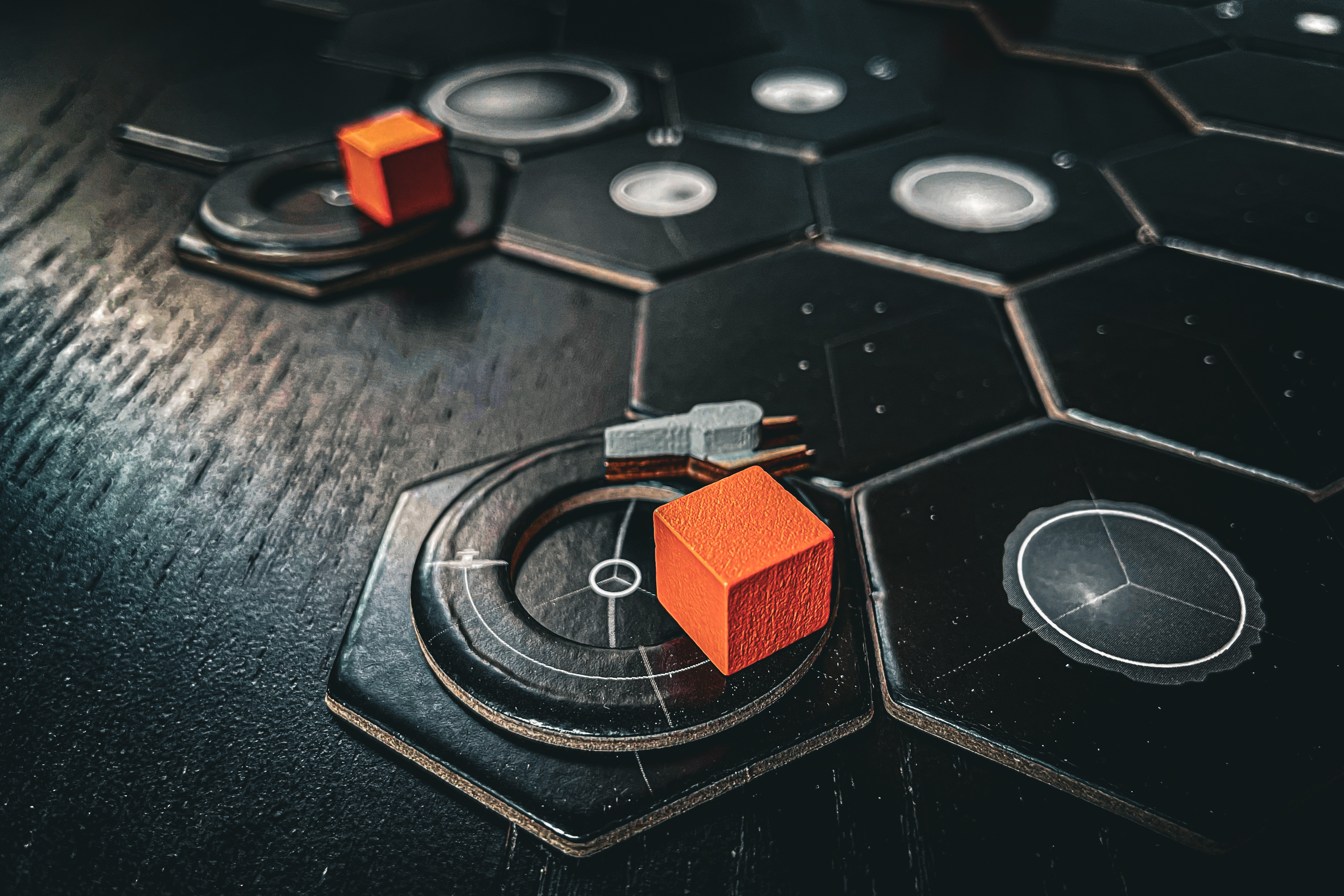
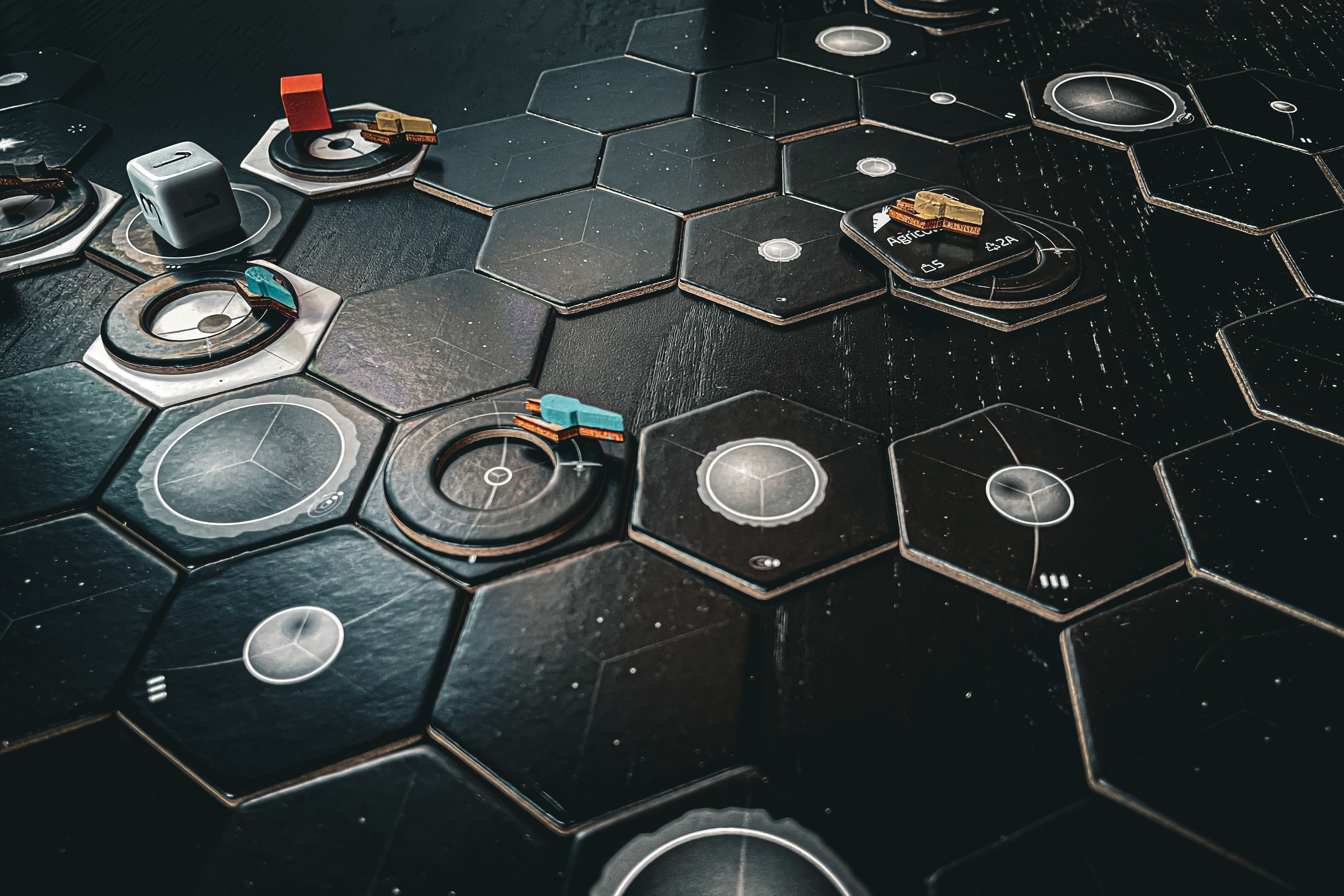
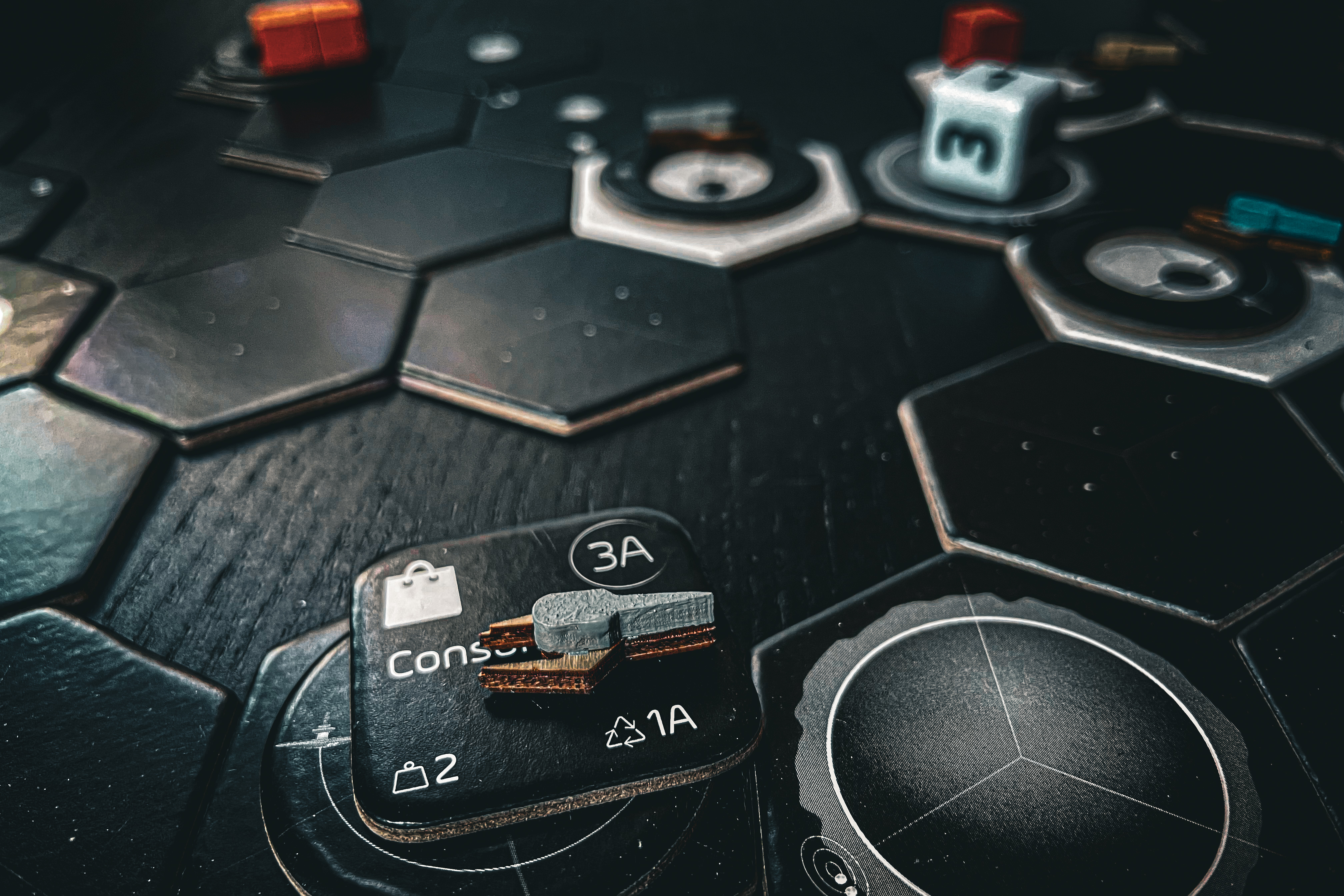
The new kit not only brings Star Carriers to a more accessible retail price, it reduces set-up time, and improves probabilities for discovering STARS, PLANETS and ENIGMAS, the density of STAR systems, and proximity of STATIONS, creating a faster-paced game with more dynamic interactions between players. New SHIP miniatures replace the original folded cardboard ones in 6 different colors.
 |
 |
 |
 |
 |
 |
 |
 |
 |
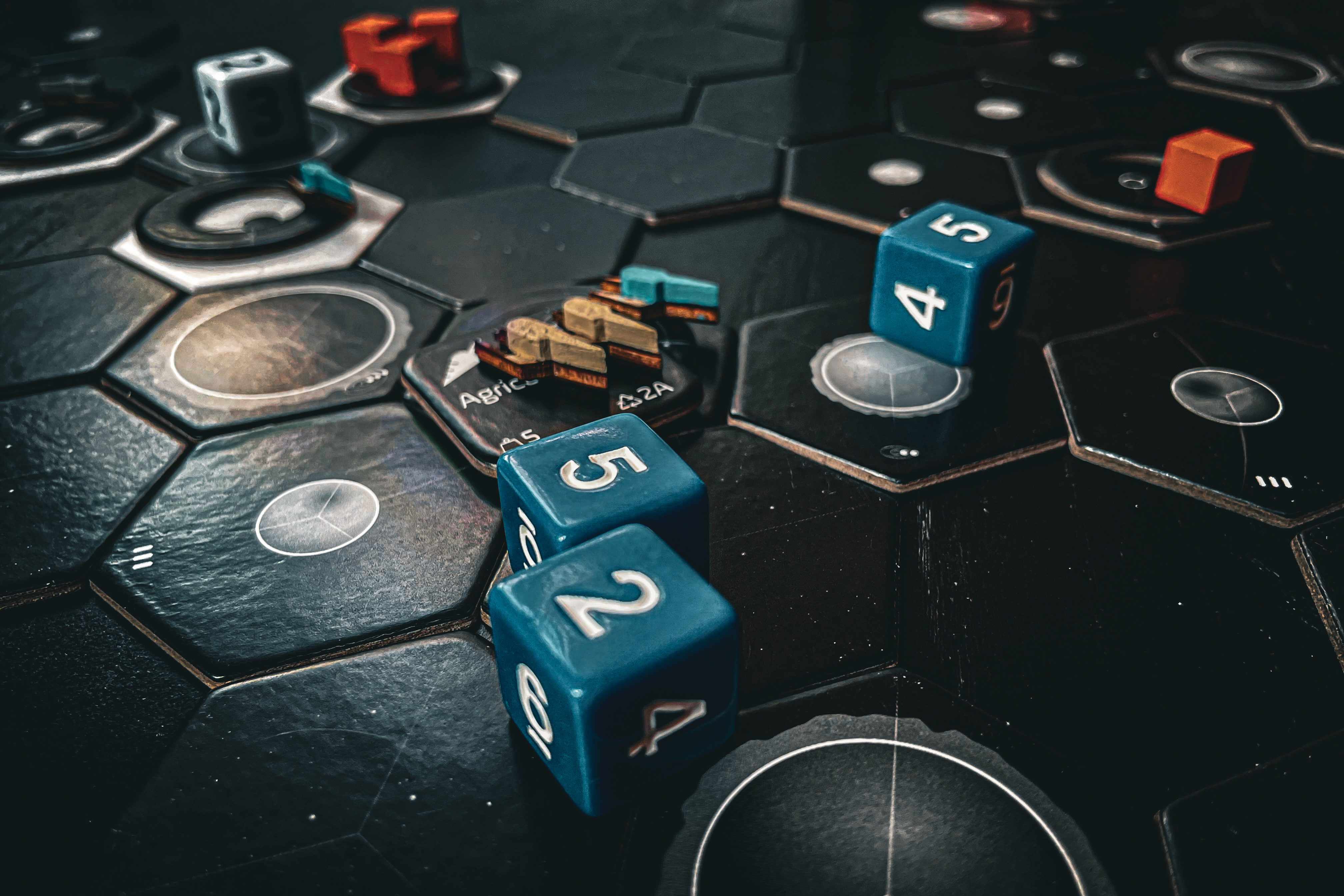 |
| Edition 2 kit on the table-top. | ||||
Resources
Earning
The order in which colonized PLANETS earned RESOURCES was not clearly specified in the Edition 1 playbook, and it was often assumed each player earned RESOURCES from their colonized PLANETS on their individual turns. Colonized PLANETS actually all earn RESOURCES simultaneously at the start of each turn, but in order of sustainability from highest to lowest. When RESOURCES become progressively scarce during the game, least sustainable PLANETS stop producing RESOURCES first.

|
Collecting
Although colonized PLANETS all earn RESOURCES simultaneously, SHIPS must collect them from STATIONS before they can be used. This means all players can immediately collect RESOURCES from STATIONS where they have SHIPS. However initiative determines the order that players get to move SHIPS to other STATIONS to collect those RESOURCES, and actively use them during the explore and expand phases. Uncollected RESOURCES are consumed by the PLANET and returned at the end of the turn.

|
Trade rate
Edition 1r4 introduced the option of using a revolving rate with the D6 as a counter. Edition 2 now includes a biased D6 that limits the trade rate to ×3, with 50% probability of ×1, and 33% probability of ×2.
|

Revolving ratePlayers can choose to use a revolving trade rate instead by using the D6 as a counter. At the start of the game, players agree on a maximum rate, for example 3, and then count-up each turn from 1 to the maximum rate. This can either reset to 1 again on the next turn, or count-down on the next turns back to 1. A revolving rate adds more predictability to the game's risk level. |
Home planets
A player's home PLANET now enables their essential INNOVATIONS for founding STATIONS and building SHIPS. If a player's home PLANET is annexed by another player, they are not eliminated, but lose their capability to expand, unless they regain their home PLANET, or annex another player's home PLANET.
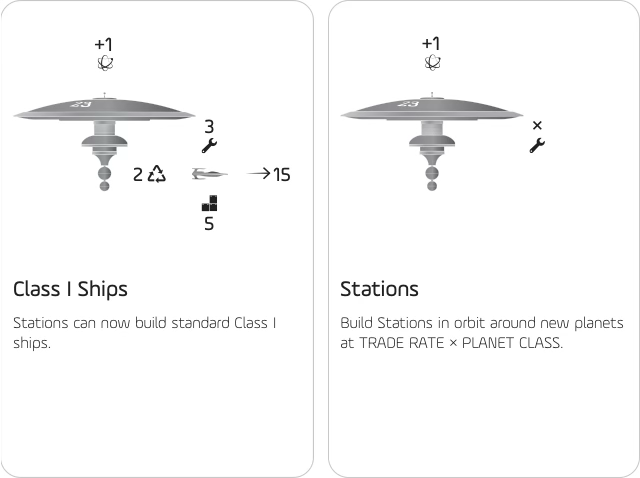
Home PLANET INNOVATIONSA player's home PLANET is essential for the INNOVATIONS that enable founding STATIONS and building SHIPS. Even though a player's other STATIONS can continue to earn RESOURCES, without their home PLANET, they can no longer colonize new PLANETS or build SHIPS at any of their STATIONS. |
Sustainability
Sustainability determines the order in which PLANETS produce RESOURCES each turn, and used to determine the winner if players decide to end the game before elimination. A PLANET's sustainability is affected by its composition and the type of STAR it orbits.
Star types
STAR are now also identified by their type (G=3, D=2, M=1), which is added (+) to the composition of PLANETS to determine sustainability.

Class II: Type-G main sequence STAR, moderate temperature with hydrogen-fusing core, capable of 2 PLANETS in orbit. High sustainability factor: +3 |

Class I: Type-D white dwarf STAR remnant, hot and dense leftover core without any fusion, capable of 1 PLANET in orbit. Moderate sustainability factor: +2 |

Class III: Type-M red giant STAR, cool temperature with helium-fusing core prior to supernova, capable of 3 PLANETS in orbit. Low sustainability factor: +1 |
Planet compositions
PLANETS produce the amount of RESOURCES determined by their class, but now their composition + type of STAR they orbit determine their sustainability, and therefore the order—from highest to lowest—in which they produce RESOURCES. Only Class II habitable PLANETS though are counted when determining sustainability at the end of the game.

Class II: Habitable terrestrial PLANET with biosphere, produces 2 RESOURCES per turn, mainly organic and biological. High composition: 6 |

Class III: Gas giant PLANET with dense toxic atmosphere, produces 3 RESOURCES per turn, generally chemicals and energy. Moderate composition: 3 |

Class I: Barren terrestrial PLANET with no biosphere, produces 1 RESOURCE per turn, primarily in the form of metals and minerals. Low composition: 0 |
Resource sustainabilityRESOURCES are produced by PLANETS in order of sustainability—from highest to lowest—which is determined by their composition + type of STAR they orbit. Class II habitable PLANETS (6) orbiting Class II Type-G STARS (+3) are most sustainable (=9) and produce RESOURCES first. Class I barren PLANETS (0) orbiting Class III Type-M STARS (+1) are least sustainable (=1) and produce RESOURCES last. As available RESOURCES become progressively scarce, the least sustainable PLANETS stop producing first. See the Explore section for more about STARS and PLANETS. |
|||
|
|
|
|
|
|
|
9 |
8 |
7 |
|
|
6 |
5 |
4 |
|
|
3 |
2 |
1 |
Net sustainability
Players can end the game by net sustainability instead of elimination.
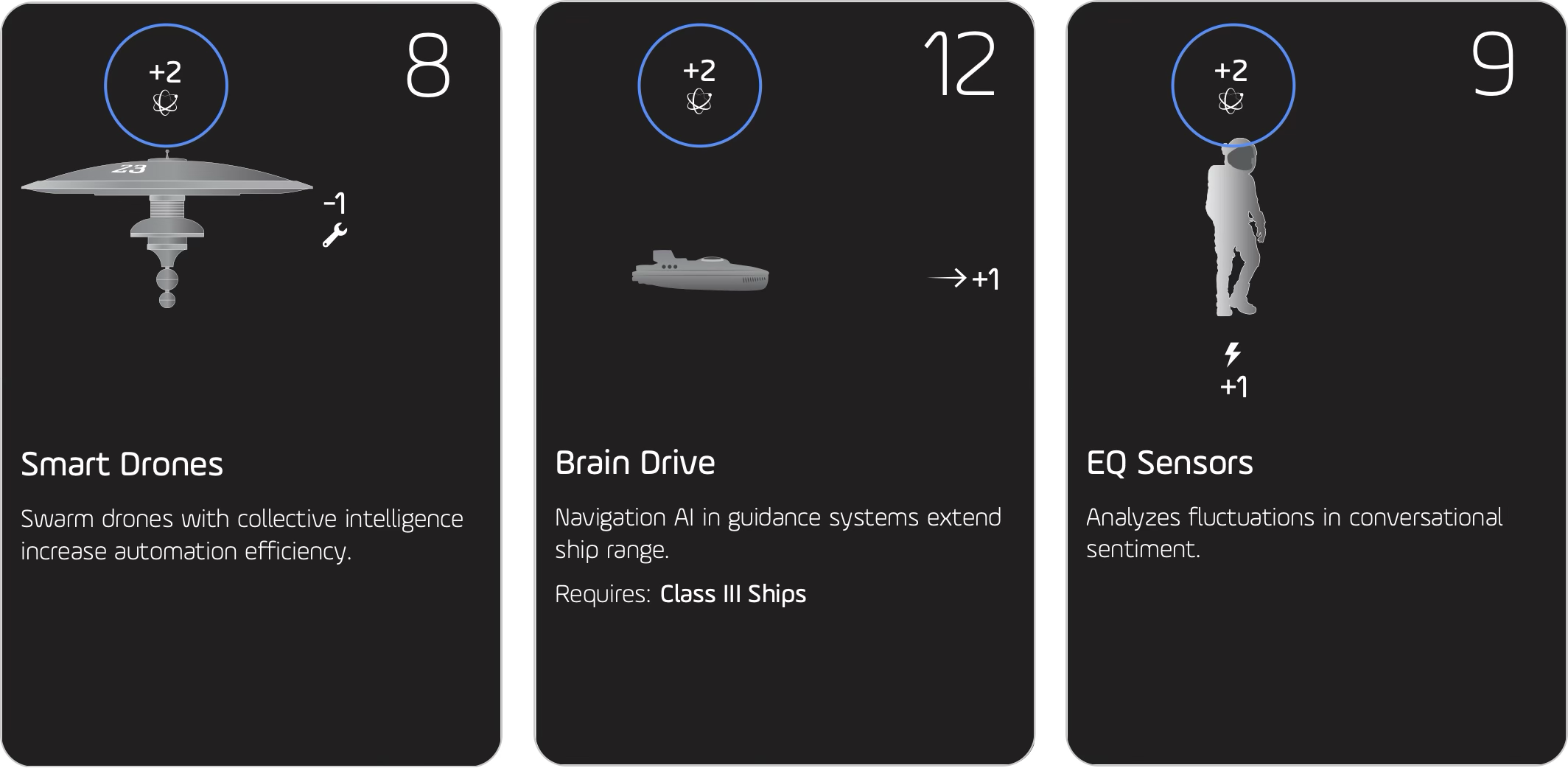
Determining net sustainabilityPlayers determine net sustainability by adding together the composition of each colonized Class II habitable PLANET that has SHIPS + the type the STAR it orbits. |
||

|
+ |

|
| + | ||
| If playing with INNOVATIONS, all advancement points from the player's INNOVATIONS. | ||
|
||
Enigmas
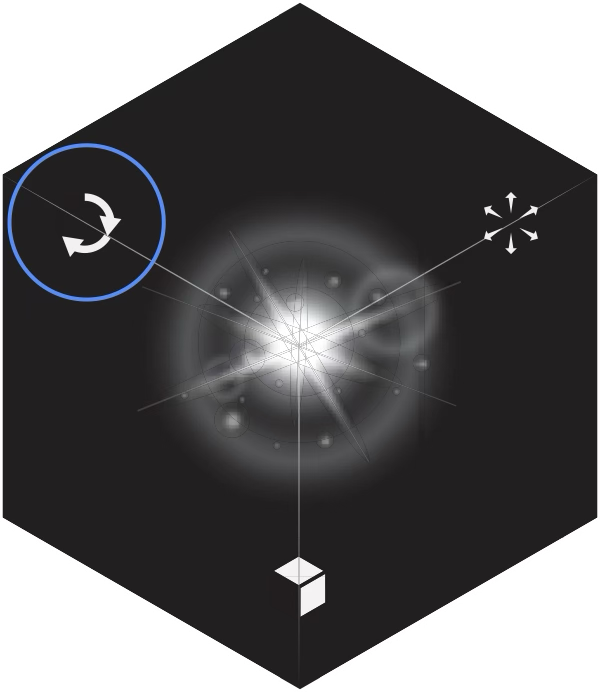
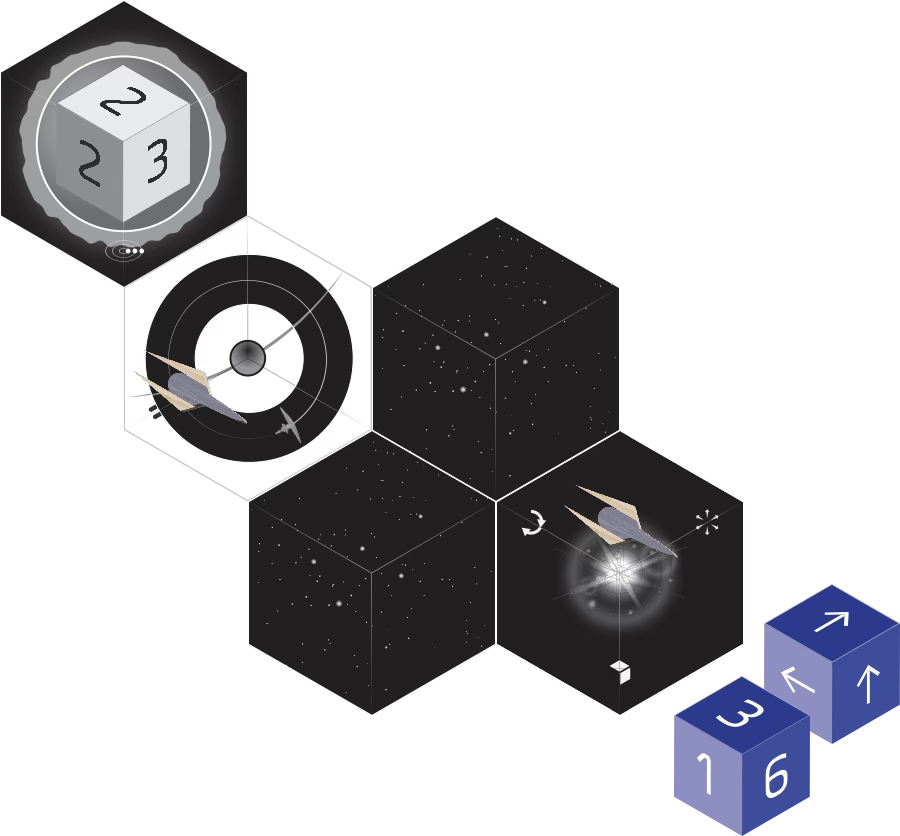
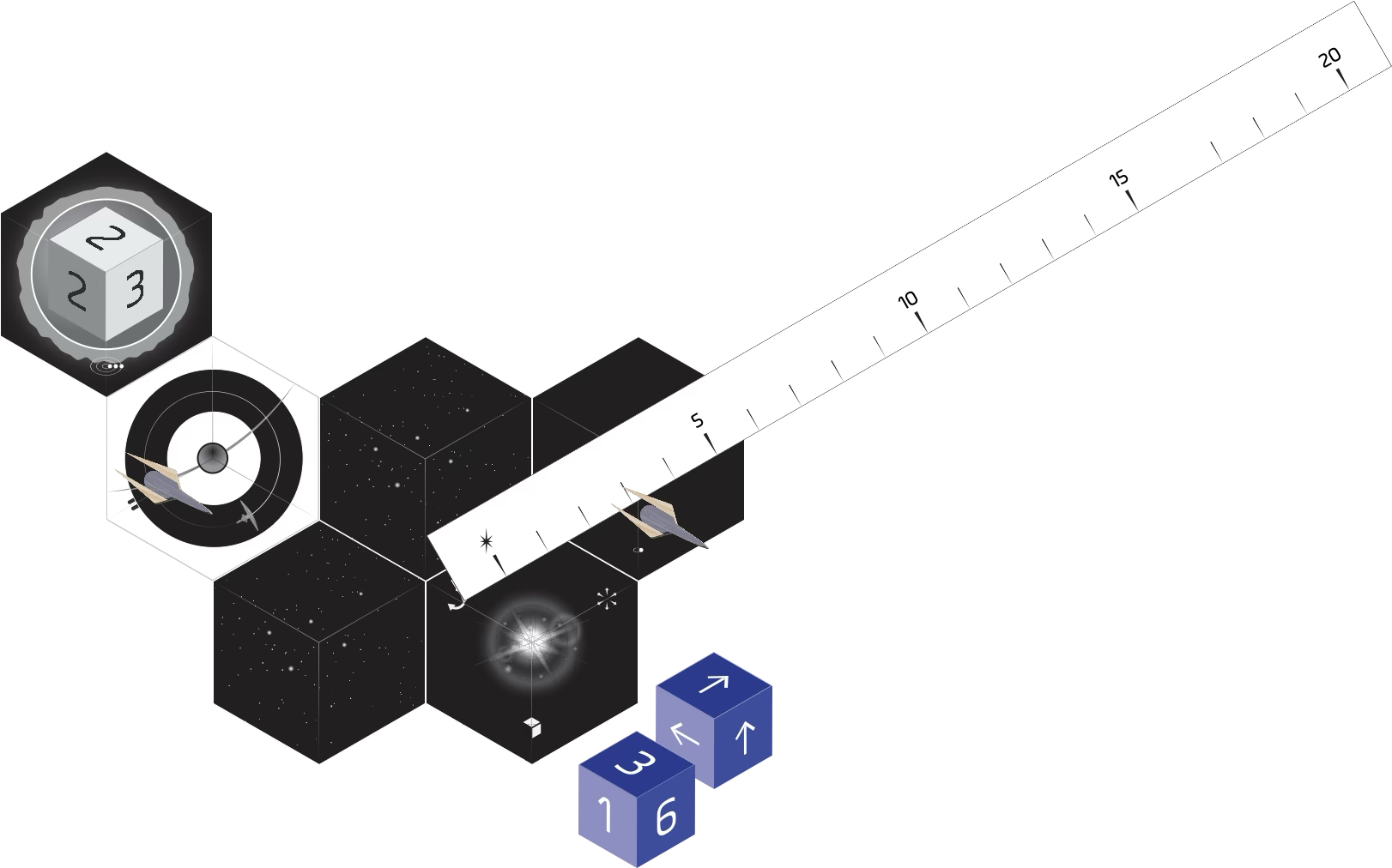
Previously only available with the ENIGMAS extension, which was included in the Extended Edition 1, Edition 2 now includes Class I Supernovas. This inclusion introduces new players to ENIGMAS without adding all the extended rules.
Classifying ENIGMASBesides their appearance and size, ENIGMAS are classified by class, effect, and duration. |
||

|

|
|
|

|

|
|
||
Exchange
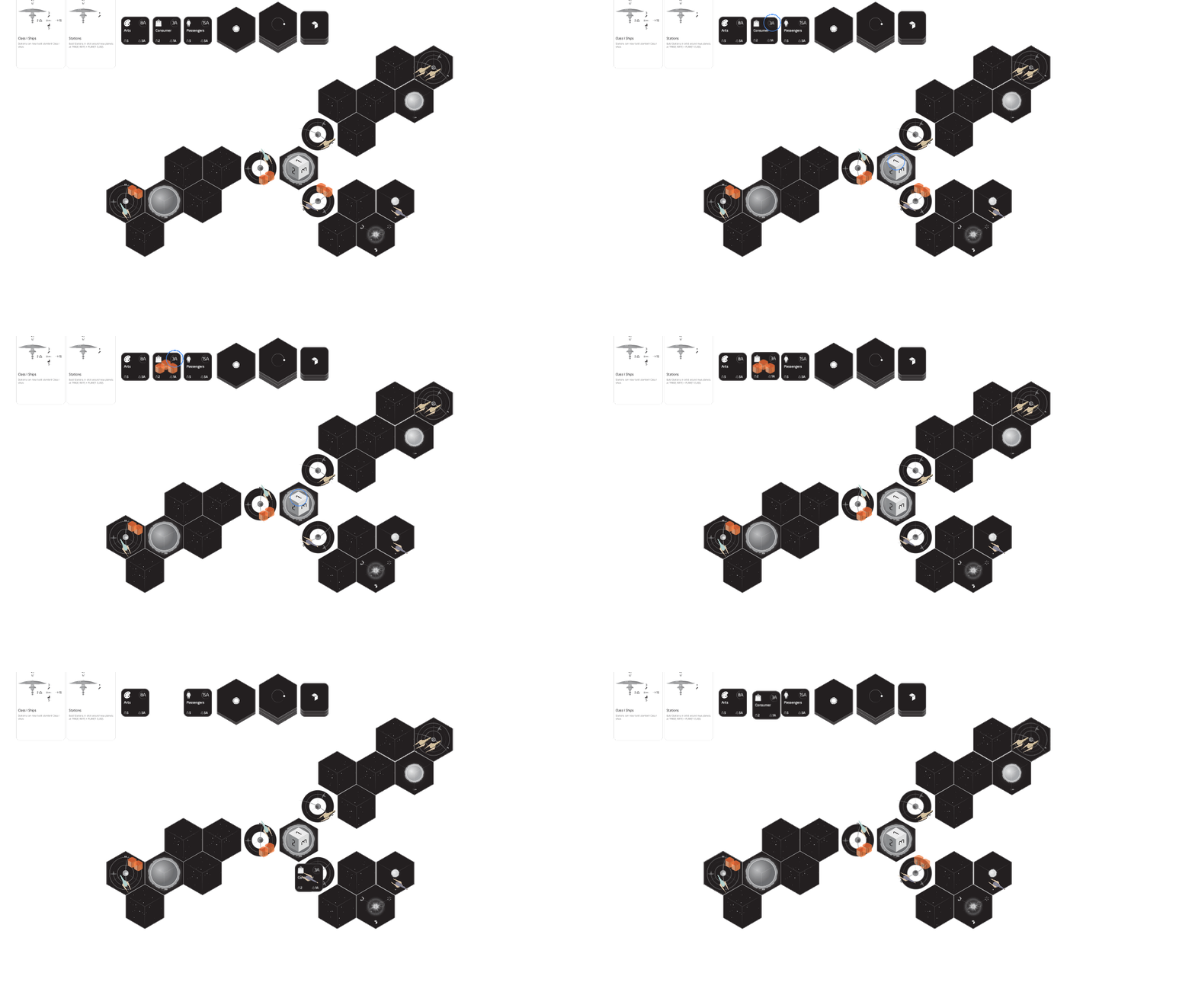
More specific rules have been codified for acquiring and loading PAYLOADS, transporting them, and resolving exchanges, including the ability for players to counter.
Acquiring and loading
PAYLOADS are acquired for their cost × trade rate during the expand phase of the turn, and can be loaded into SHIPS at STATIONS. This means they can be exchanged after the next explore phase.
|
Fleets
Fleets no longer sum the total D6s for initiative, but instead take the SHIP with the highest D6 as the fleet initiative. A fleet can only have a maximum of 3 SHIPS. This shifts the advantage of fleets from having a purely linear power scale to a probability advantage that still permits inferior SHIPS the ability to successfully defend.

|

|
Countering
If a player has an equal or higher initiative, they can choose to counter the exchange, by offering to acquire the PAYLOAD at its salvage value. If so, both players roll for initiative again. The player with the lower initiative must accept the counter. Countering is an opportunity to "steal" a PAYLOAD from another player at the lowest cost despite the trade rate.
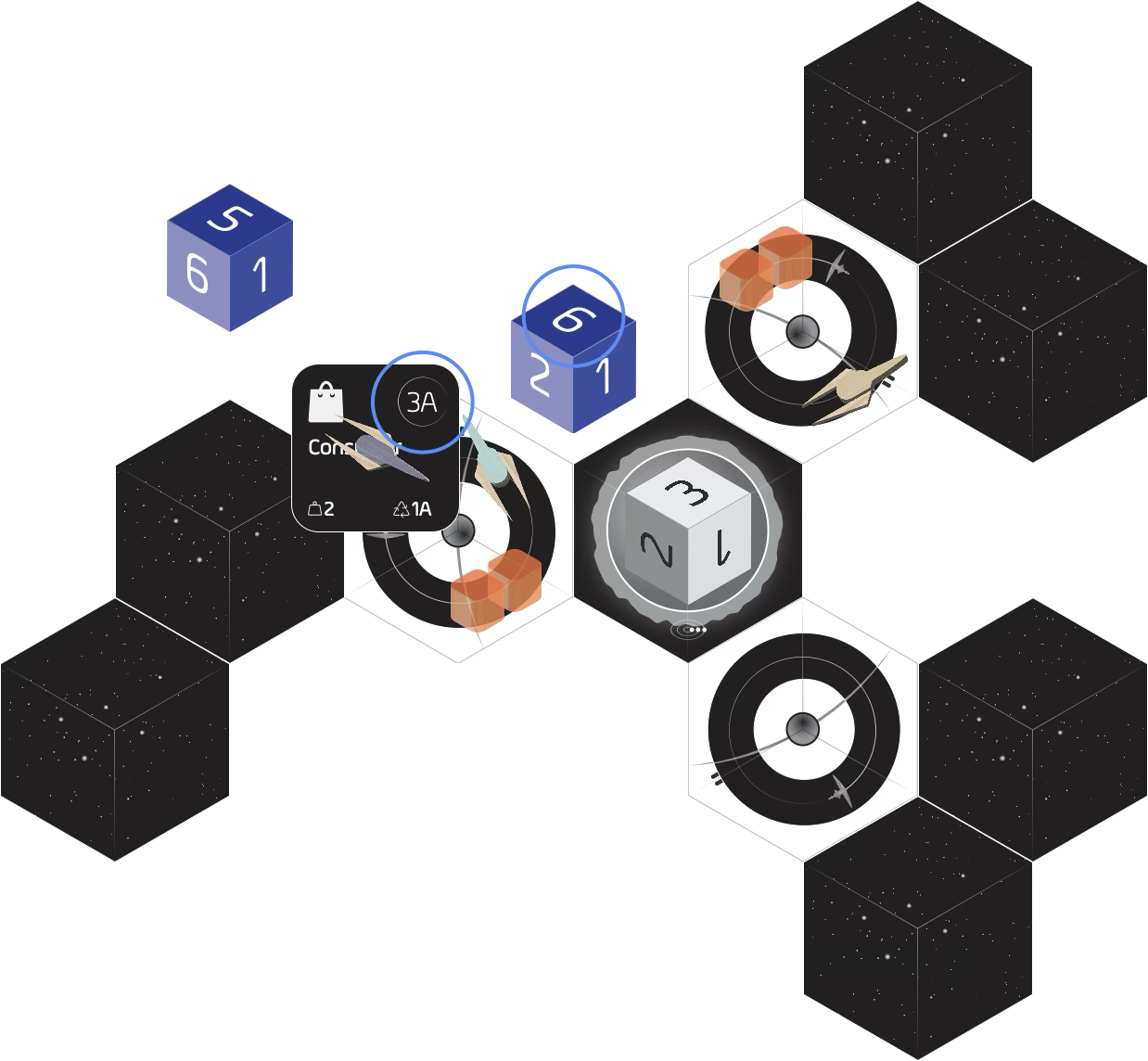
|

|
Salvaging resources
To salvage RESOURCES, only SHIPS and PAYLOADS at STATIONS can be decommissioned and recycled. Salvaged RESOURCES can be collected and used immediately.

|

|
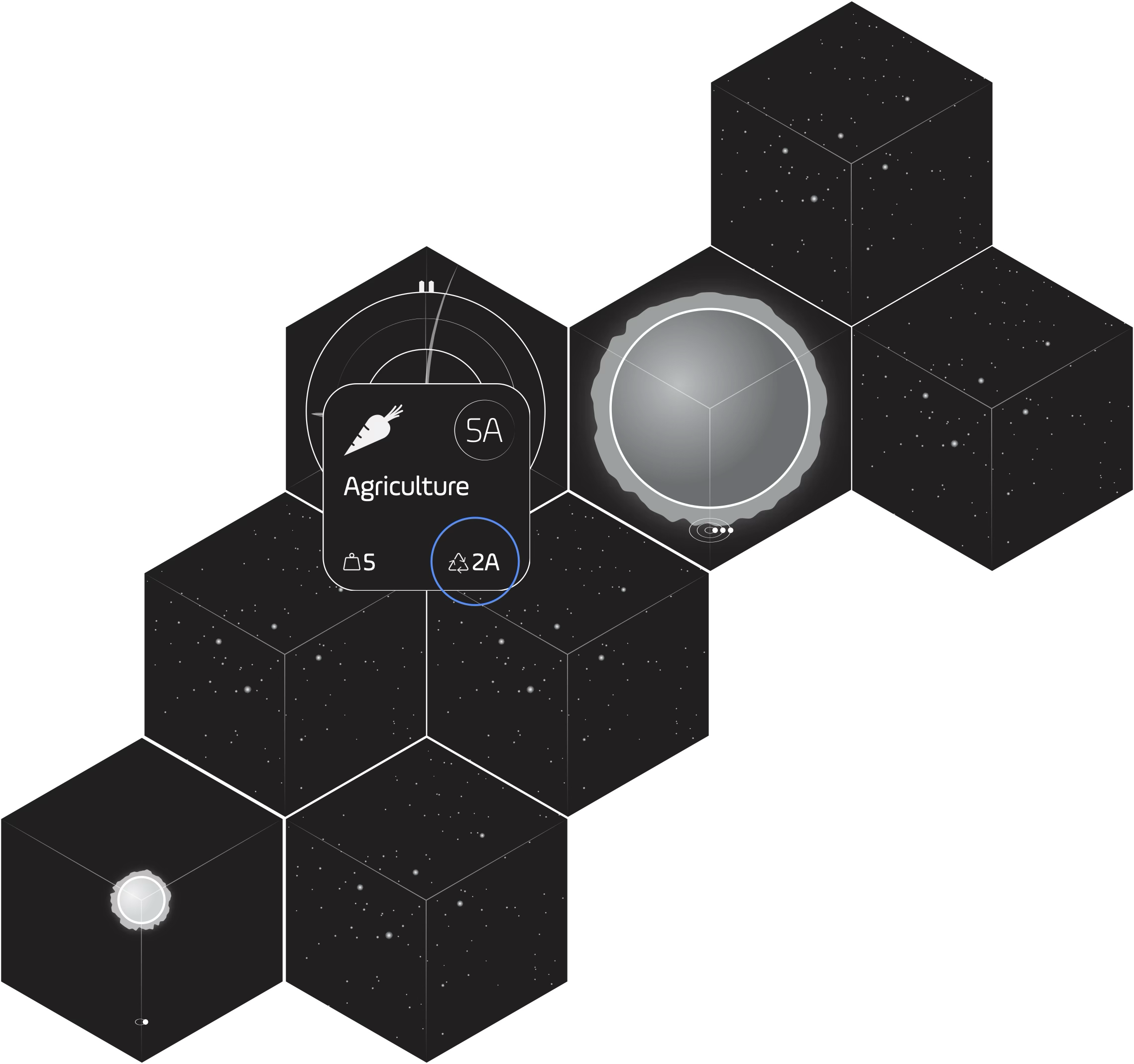
Decommissioning shipsA player's SHIPS at any STATION, not those in transit, can be decommissioned for the salvage value indicated on their INNOVATION card. It is not necessary to decommission SHIPS at the same STATION as the exchange, especially when protecting the STATION from being annexed. Collect salvaged RESOURCES, and remove decommissioned SHIPS. |
|
|

|
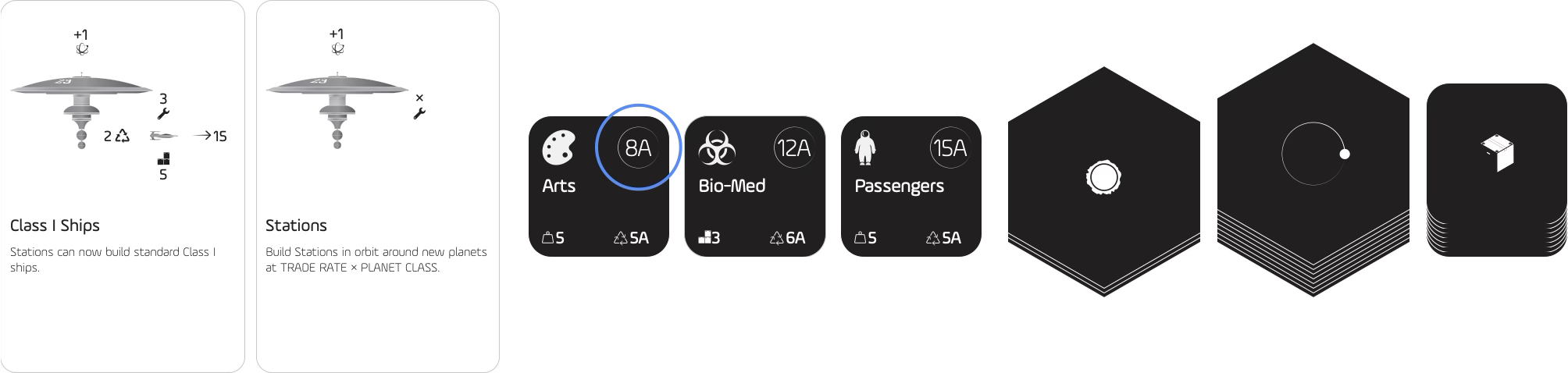
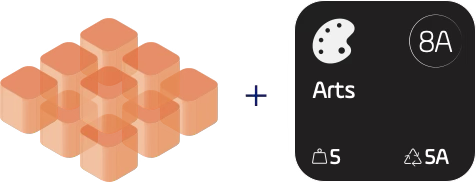
Recycling payloadsA player's PAYLOADS at any STATION, not those in transit, can also be recycled for the salvage value indicated on their PAYLOAD chips. Collect salvaged RESOURCES and return recycled PAYLOADS to the bottom of the PAYLOAD stack. |
|
|
|
Payloads as collateralAt certain points in the game, especially in later turns, there may be a shortage of RESOURCES for circulation. Players can use PAYLOADS as collateral by acquiring available PAYLOADS for their cost × 1, and holding them. PAYLOADS held as collateral can be used or returned as RESOURCES for their cost × 1, but cannot be transported or exchanged at STATIONS. PAYLOADS used as collateral are returned back to the bottom of the stack when released. |
|